
The European Union has drawn ambitious lines on the map, designating vast swathes of its waters as marine sanctuaries. Yet, as David Attenborough reveals in a recent, landmark clip from Ocean with David Attenborough, what happens beneath the surface of these so-called safe havens is something most people have never witnessed — until now (link at bottom). Iron chains and metal beams bulldoze across the ocean floor, smashing habitats and sweeping up marine life indiscriminately, with over three-quarters of what is caught often discarded. "It's hard to imagine a more wasteful way to catch fish," Attenborough states plainly. This destruction does not occur in lawless waters. It happens inside the EU's own designated marine protected areas — and it continues largely unchecked.
For those who find it difficult to grasp the scale of this destruction, the recently released clip from Ocean with David Attenborough provides a sobering visual reckoning. Filmed in high definition for what Altitude Films describes as the first time at this level of quality, the footage captures industrial trawlers dragging iron chains and metal beams across the seabed — pulverising coral, sponge beds, and seafloor habitat in a matter of seconds. Attenborough notes that an area nearly the size of the Amazon rainforest is trawled every single year, with the same sites repeatedly targeted before any recovery is possible. This is not footage from unregulated, distant waters — much of this activity occurs within the EU's own designated protected zones, hidden from public view and, too often, from regulators as well. Making this destruction visible is not merely a conservation exercise; it is a direct indictment of the enforcement failures at the heart of EU marine policy.
Laws on the Books, Trawlers on the Seabed
On paper, the European Union stands as a global leader in marine conservation. Policies such as the Common Fisheries Policy (CFP) and the Natura 2000 network provide a strong legal foundation for managing fishing sustainably and safeguarding biodiversity. The EU’s commitment aligns with international goals, including the Convention on Biological Diversity, aiming to protect at least 30% of marine waters by 2030, with strict protections for 10%.
A significant legislative milestone was the Deep-Sea Access Regulation (EU Regulation 2016/2336), which banned bottom trawling below 800 metres in the Northeast Atlantic. This measure was designed to protect Vulnerable Marine Ecosystems (VMEs) like cold-water coral reefs and sponge aggregations. In 2022, these closures were expanded to shallower depths of 400 to 800 metres in specific areas, further reducing pressure on ecologically sensitive zones.
Despite these clear legal mandates, the reality on the water tells a different story. Satellite tracking data—utilizing Automatic Identification Systems (AIS) and Vessel Monitoring Systems (VMS)—reveals that bottom trawling remains widespread within designated Marine Protected Areas (MPAs). The report indicates that a large share of the EU's MPA network is insufficiently regulated, often functioning as "paper parks"—areas with legal status but no meaningful protection from industrial extraction. This disconnect highlights a critical failure to translate ambitious conservation targets into effective management.
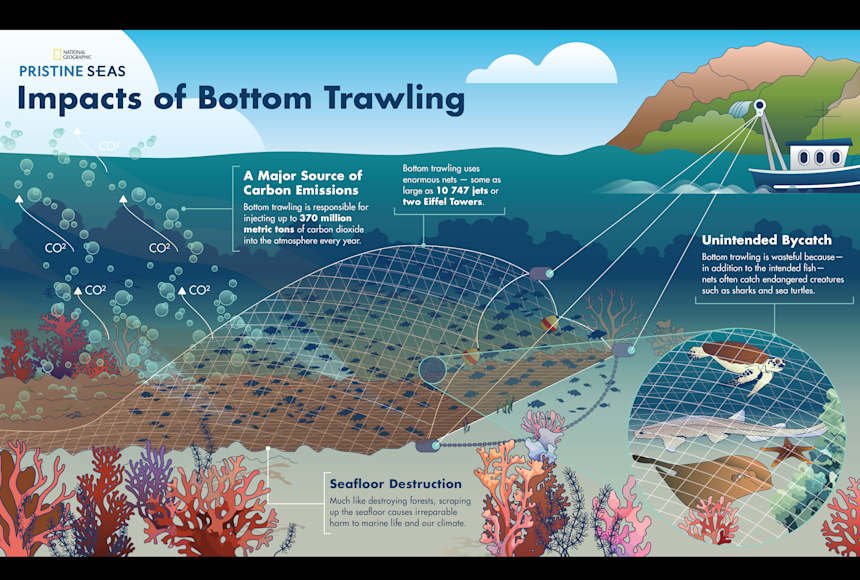
Image: National Geographic
Enforcement Gaps and the "Dark" Fishing Phenomenon
Why does this problem persist despite clear regulations? The report identifies significant deficits in enforcement and compliance as primary drivers.
The Challenge of Surveillance
Effective monitoring of vast marine territories requires substantial resources and coordination. However, patrol capacities vary drastically across Member States. In many regions, resources for maritime surveillance are lacking, and responses to infractions are often delayed. Furthermore, penalties for violations are frequently too lenient to serve as a genuine deterrent against highly profitable illegal activities.
"Dark" Fishing
A more insidious challenge is the practice of "dark" fishing. This occurs when vessels intentionally disable their satellite tracking systems to avoid detection while operating in restricted zones. Without consistent electronic monitoring, these vessels can plunder protected areas with impunity. This evasion tactic substantially impairs enforcement efforts and necessitates the adoption of more advanced monitoring solutions to close the net on illegal actors.
Political and Administrative Barriers
Beyond operational challenges, political resistance often stalls progress. The designation and enforcement of no-trawl zones frequently face intense lobbying from the fishing sector. Bureaucratic inertia and inter-agency disagreements can delay the implementation of conservation measures for years. Consequently, even when Member States possess the legal power to restrict trawling, the political will to do so is often absent.
The High Cost to Marine Ecosystems
The environmental impact of bottom trawling is devastating and well-documented. Scientific consensus compares the practice to clear-cutting a forest. Heavy nets and gear are dragged across the ocean floor, demolishing everything in their path.
Destruction of Benthic Habitats
This process destroys critical benthic habitats such as cold-water coral reefs, sponge gardens, and seagrass beds. These structures serve as essential nurseries, feeding grounds, and refuges for countless species. Research shows that damage to deep-coral ecosystems is long-lasting, with recovery often negligible even decades after fishing ceases. By degrading these habitats, bottom trawling reduces the ocean's overall productivity and resilience.
Impact on Fish Stocks and Biodiversity
The destruction of habitats has a direct negative impact on fish populations. Species like Atlantic cod, which is currently listed as "Vulnerable," struggle to recover when their spawning and nursery grounds are repeatedly disturbed. Furthermore, bottom trawling is an indiscriminate method that results in high levels of bycatch. Non-target species, including sharks, rays, and marine mammals, are frequently caught and discarded, further destabilizing the marine food web.
Climate Implications
The damage extends beyond biodiversity. The seabed is a massive carbon sink, storing vast amounts of carbon in its sediments. When trawlers plough the ocean floor, they disturb these sediments, releasing stored carbon back into the water column. This process not only diminishes the ocean's capacity to mitigate climate change but may also contribute to ocean acidification.
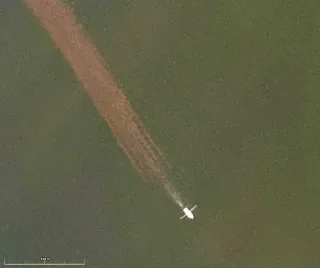
Sediment plume generated by trawler in the Gulf of Mexico. Image: https://flickr.com/photos/skytruth/albums/72157613362420565/
The Economic Dilemma: Short-Term Gain vs. Long-Term Viability
The debate over bottom trawling is complicated by its significant socio-economic footprint. For coastal nations like Spain, France, and Italy, the industry is a major economic driver.
Dependence on Industrial Fishing
The bottom-trawling sector supports thousands of jobs, from fishers and crew to processing workers and gear suppliers. It generates substantial revenue through the harvest of high-value species like hake, sole, and Nephrops (langoustine). For many coastal communities, restrictions on trawling are viewed as direct threats to their livelihoods and regional stability.
The Price of Unsustainability
However, the report argues that prioritizing short-term economic gains comes at a perilous cost. Overfishing and habitat destruction lead to declining fish stocks, which in turn forces vessels to expend more effort and fuel for the same catch—a metric known as Catch Per Unit Effort (CPUE).
As stocks deplete, the industry faces a future of diminishing returns. Boom-and-bust cycles become more frequent, often leading to fishery closures and a reliance on public subsidies to survive. The report suggests that the current extractive model undermines the very resource base the industry depends on, threatening the future profitability of the fisheries sector. Transitioning away from destructive practices is, therefore, not just an environmental imperative but an economic necessity to secure the sector's long-term future.
Recommendations: Bridging the Gap
The report makes it clear that the EU possesses the necessary legal tools to protect its waters but lacks the consistent application to make them effective. Bridging the gap between policy and practice is essential.
Key Recommendations Include:
Strengthened Surveillance: Member States must invest in advanced monitoring technologies to detect "dark" vessels and ensure comprehensive coverage of MPAs.
Harmonized Enforcement: Penalties and patrol efforts need to be consistent across all EU waters to prevent displacement of illegal activity to regions with weaker oversight.
Just Transition for Communities: Support mechanisms must be established to help coastal communities transition to sustainable, low-impact fishing methods. This includes funding for gear modification and retraining programs.
Decisive Political Action: Governments must overcome political inertia and prioritize the long-term health of marine ecosystems over short-term industrial interests.
Conclusion
The European Union stands at a crossroads. While its legislative framework for marine conservation is commendable, the continued prevalence of bottom trawling in protected areas undermines these efforts. The destruction of essential habitats and the depletion of key fish stocks jeopardize both the EU's biodiversity targets and the future of its fishing communities.
For the EU to truly lead in ocean governance, it must move beyond drawing lines on a map. Real protection requires robust enforcement, political courage, and a strategic transition toward sustainable fisheries. Only then can we ensure that our "protected seas" provide genuine sanctuary for marine life and lasting benefits for future generations.
Ocean with David Attenborough official clip: https://www.youtube.com/watch?v=IzG9AwlypaY